
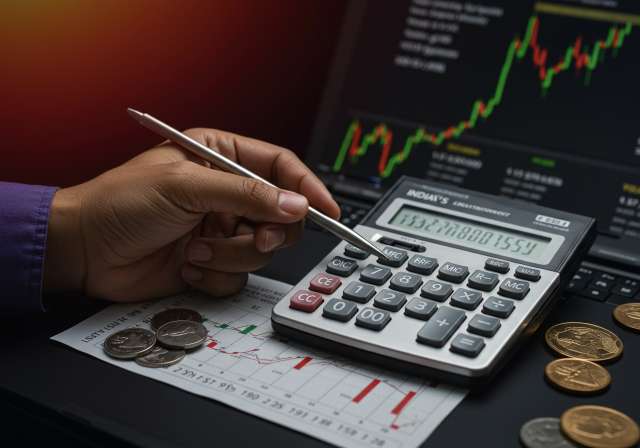
Confused about time in finance? Understand the SI unit of time period & how it affects your investments. Learn practical applications & avoid costly mistakes!
Time’s Up! Decoding the SI Unit of Time Period
Confused about time in finance? Understand the SI unit of time period & how it affects your investments. Learn practical applications & avoid costly mistakes!
As an Indian investor, you know time is money. Whether you’re religiously making your SIP contributions to a high-growth mutual fund, carefully monitoring your ELSS investments for tax benefits, or patiently holding onto your shares listed on the NSE or BSE, time is the constant, silent partner in your financial journey. But have you ever stopped to think about the fundamental unit we use to measure this all-important element? The relentless ticking that dictates when your investments mature, when dividends are paid, and when tax deadlines loom?
Let’s dive into the basics. When we talk about measuring time, we’re talking about a fundamental unit, one that forms the bedrock of all other time-related measurements. That fundamental unit, enshrined in the International System of Units (SI), is the second. Think of it as the atomic building block of time, the smallest indivisible increment from which all else is derived. It’s the base upon which we build our understanding of everything from nano-second oscillations in high-frequency trading algorithms to the multi-decade investment horizons required for truly significant wealth creation.
Now, you might be thinking, “A second? That seems awfully short!” And you’d be right. It is short. But its precision is what makes it so valuable. The modern definition of the second is based on the oscillations of a caesium-133 atom. It’s mind-bogglingly accurate, far more precise than swinging pendulums or the rising and setting of the sun, which were used in the past. This accuracy is crucial, particularly in the complex world of finance where even fractions of a second can make or break a trade.
So, why should this technical detail matter to you, the average Indian investor trying to grow your wealth and secure your financial future? Because understanding the concept of time and its accurate measurement underpins several key aspects of investing:
Consider a fixed deposit with your local bank or a corporate bond you’ve invested in. The interest you earn isn’t just a percentage; it’s a percentage per annum, meaning per year. And a year, in turn, is a defined number of seconds! Without a precise understanding of the second, calculating the actual return on your investment over a specific period would be impossible. Imagine trying to figure out the compound interest on your PPF account if the unit of time was arbitrary! The accuracy of the second ensures that the interest calculations are consistent and fair.
We’ve all heard stories about people trying to “time the market” – buying low and selling high. The allure is strong, but the reality is that consistently predicting market movements based on split-second timing is incredibly difficult, even for seasoned professionals. A thorough understanding of market cycles is very important. The shorter the investment window, the more volatile and uncertain the market becomes. Focusing on long-term investment strategies, such as SIPs in well-performing mutual funds, smooths out these fluctuations and mitigates the risk associated with short-term market timing.
Many financial instruments are directly tied to time. Options contracts, for example, have an expiration date, meaning they are only valid for a specific period. Knowing the exact length of that period – measured in seconds, minutes, days, weeks, and months, all ultimately derived from the SI second – is critical to understanding the potential risks and rewards associated with the option. The same applies to futures contracts, bonds with maturity dates, and even the holding period for claiming long-term capital gains tax benefits.
what is the si unit of time period
While most Indian investors don’t engage in high-frequency trading, it’s important to acknowledge its impact on the market. HFT algorithms operate on timescales measured in milliseconds and even microseconds. These systems exploit tiny price discrepancies across exchanges, making thousands of trades in the blink of an eye. The accuracy of the second is absolutely essential for the operation of these systems, as even a slight error in timing could lead to significant losses.
Regulatory bodies like SEBI rely on accurate timekeeping for tracking trades, detecting market manipulation, and ensuring fair practices. Timestamps are used to record every transaction on the NSE and BSE, providing an auditable trail of all market activity. This level of accuracy is essential for maintaining investor confidence and preventing fraudulent activities.
Now that we’ve established the importance of the second, let’s look at how this understanding can help you make smarter investment decisions:
While the second is the fundamental unit, we rarely deal with individual seconds in our everyday investment lives. We think in terms of minutes, hours, days, weeks, months, and years. These larger units are simply multiples of the second and make it easier to conceptualize longer timeframes. For example, when you’re planning for retirement, you’re not thinking about how many billions of seconds you have left; you’re thinking in terms of how many years you have until retirement and how many years you’ll need your retirement savings to last.
Therefore, it is paramount to develop a time-bound investment strategy. Your financial goals (buying a home, funding your child’s education, retirement planning) should each have a corresponding timeline. Use this timeline to select appropriate investment instruments and periodically review your progress to ensure you’re on track. Don’t hesitate to consult a financial advisor to create a personalized investment plan that aligns with your goals and risk tolerance.
Ultimately, understanding the SI unit of time, and how it’s applied in financial contexts, empowers you to make more informed investment decisions. Time is one of the most valuable assets in your investment arsenal. By appreciating its importance and utilizing it strategically, you can significantly enhance your chances of achieving your financial goals and securing a brighter future for yourself and your loved ones. Remember to stay invested, stay informed, and let time work its magic!
Investing and the Inescapable Tick-Tock of Time
Understanding the Foundation: The Second as the SI Unit
The Practical Implications for Indian Investors
1. Calculating Returns and Interest:
2. Timing the Market (and Why You Shouldn’t!):
3. Understanding Financial Instruments:
4. High-Frequency Trading (HFT) and Algorithms:
5. Regulatory Compliance and Reporting:
How the SI Unit of Time Period Impacts Your Investment Decisions
- Long-Term vs. Short-Term Investments: Realize that the longer your investment horizon, the less vulnerable you are to short-term market volatility. The magic of compounding, as demonstrated by SIPs, truly works over extended periods.
- Understanding Risk: Understand that, short-term investments, especially speculative ones, carry higher risk. The shorter the timeframe, the greater the chance of unpredictable market swings impacting your returns.
- Setting Realistic Expectations: Avoid get-rich-quick schemes that promise unrealistic returns in short periods. Sustainable wealth creation is a long-term process that requires patience and discipline.
- Diversification: Diversify your investment portfolio across different asset classes with varying time horizons. This helps mitigate risk and ensures a more stable overall return. For instance, consider a mix of equity mutual funds (long-term), debt funds (medium-term), and short-term liquid funds (short-term).

Be First to Comment