

Understand the Crypto Market Cap! This guide simplifies how to use a crypto market cap calculator, interpret the data, and make informed investment decisions. N
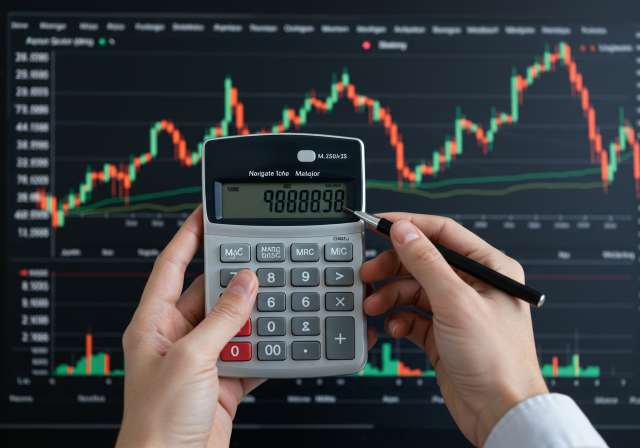
Understand the Crypto Market Cap! This guide simplifies how to use a crypto market cap calculator, interpret the data, and make informed investment decisions. Navigate the digital asset landscape with confidence!
Decoding Crypto Market Cap: A Simple Guide for Indian Investors
Navigating the Digital Frontier: Why Market Cap Matters
The world of cryptocurrencies can seem like a dizzying rollercoaster, especially for Indian investors accustomed to the relatively more regulated environments of the NSE and BSE. Bitcoin, Ethereum, and a whole host of altcoins are constantly making headlines, with prices fluctuating wildly. But amidst the noise, one metric stands out as a crucial indicator of a cryptocurrency’s size and relative stability: its market capitalization, or market cap.
Think of it this way: imagine you’re evaluating a company on the stock market. Would you rather invest in a small, newly-listed company with limited revenue or a behemoth like Reliance Industries? The same principle applies to cryptocurrencies. Market cap provides a quick snapshot of a crypto asset’s total value and its position within the broader crypto ecosystem.
Understanding market cap is especially important for Indian investors who are increasingly drawn to the potential of crypto assets, whether through exchanges like WazirX, CoinDCX, or exploring blockchain-based investment opportunities. It allows you to gauge the risk associated with a particular cryptocurrency and helps you make more informed investment decisions. After all, diversifying your portfolio with crypto doesn’t mean throwing caution to the wind; it requires understanding the underlying metrics.
What Exactly is Crypto Market Cap? Breaking it Down in Rupees and Paise
The market capitalization of a cryptocurrency is calculated by multiplying the current price of one unit of that cryptocurrency by the total number of coins or tokens in circulation. Sounds simple enough, right? Let’s break it down with an example.
Imagine a new cryptocurrency called “BharatCoin” is trading at ₹100 per coin, and there are 1 million BharatCoins in circulation. The market cap of BharatCoin would be:
₹100 (Price per coin) 1,000,000 (Circulating Supply) = ₹100,000,000 (₹10 Crore)
Therefore, BharatCoin’s market cap is ₹10 Crore. This represents the total value of all BharatCoins currently available in the market.
Now, let’s categorize cryptocurrencies based on their market cap, similar to how stocks are categorized on the Indian stock exchanges:
- Large-Cap Cryptocurrencies: These are the giants of the crypto world, like Bitcoin and Ethereum. They typically have market caps above ₹80,000 Crore (equivalent to roughly $10 billion USD). Large-cap cryptos are generally considered more stable and less volatile than smaller cryptocurrencies. Think of them as the Reliance Industries or TCS of the crypto world.
- Mid-Cap Cryptocurrencies: These fall in the middle, with market caps ranging from ₹8,000 Crore to ₹80,000 Crore (roughly $1 billion to $10 billion USD). Mid-cap cryptos offer a balance between growth potential and relative stability. They are comparable to well-established mid-sized companies listed on the NSE.
- Small-Cap Cryptocurrencies: These are the up-and-comers, with market caps below ₹8,000 Crore (roughly below $1 billion USD). Small-cap cryptos often have the highest growth potential, but they also carry the highest risk. Investing in small-cap cryptos is like investing in penny stocks – the potential for significant gains is there, but so is the risk of substantial losses.
How to Use a Crypto Market Cap Calculator: A Step-by-Step Guide
So, how do you actually figure out the market cap of a particular cryptocurrency? Thankfully, you don’t need to do the calculations manually. Numerous online resources, including CoinMarketCap, CoinGecko, and even many Indian crypto exchange platforms, provide this information readily. Many websites also provide a calculator. To leverage a crypto market cap calculator effectively, follow these steps:
- Find a Reputable Source: Choose a well-known and reliable website or app that tracks cryptocurrency data. CoinMarketCap and CoinGecko are popular global options, while WazirX and CoinDCX are Indian platforms that also provide market cap information for listed cryptocurrencies.
- Search for the Cryptocurrency: Use the search bar on the platform to find the specific cryptocurrency you’re interested in. For example, you might search for “Bitcoin” or “Ethereum.”
- Locate the Market Cap: Once you’ve found the cryptocurrency, look for the “Market Cap” or “Market Capitalization” figure. This value is usually displayed prominently on the cryptocurrency’s information page.
- Analyze the Data: Observe the market cap and compare it to other cryptocurrencies. Is it a large-cap, mid-cap, or small-cap crypto? This will give you an initial indication of its size and relative risk.
Beyond the Numbers: What Market Cap Doesn’t Tell You
While market cap is a valuable metric, it’s crucial to remember that it’s not the only factor to consider when evaluating a cryptocurrency. Relying solely on market cap can be misleading.
- Inflated Circulating Supply: Some cryptocurrencies might have a significant portion of their total supply held by a small group of individuals or the project team itself. This can artificially inflate the market cap without reflecting genuine market demand.
- Trading Volume: A high market cap combined with low trading volume can be a red flag. It suggests that there might not be enough liquidity in the market, making it difficult to buy or sell the cryptocurrency quickly and at a fair price.
- Underlying Technology and Use Case: Ultimately, the long-term success of a cryptocurrency depends on its underlying technology, its real-world use cases, and the strength of its development team. A high market cap doesn’t guarantee that a cryptocurrency is built on solid foundations.
Practical Insights for the Indian Investor: Making Informed Decisions
So, how can Indian investors use market cap information to make smarter investment decisions in the crypto space? Here are a few practical tips:
- Diversify Your Portfolio: Don’t put all your eggs in one basket. Diversify your crypto portfolio across different market cap categories. Consider allocating a larger portion of your portfolio to large-cap cryptocurrencies for stability and a smaller portion to mid-cap and small-cap cryptocurrencies for potential growth. This mirrors the strategy of many Indian investors who diversify across large-cap, mid-cap and small-cap stocks through mutual funds or direct equity investments.
- Consider Your Risk Tolerance: Small-cap cryptocurrencies are generally riskier than large-cap cryptocurrencies. Before investing in any cryptocurrency, assess your risk tolerance and only invest what you can afford to lose. Think of it like investing in ELSS funds – understand the lock-in period and market risks before committing.
- Do Your Research: Don’t rely solely on market cap. Research the underlying technology, the team behind the project, the use case, and the community support before investing in any cryptocurrency. Just like you would carefully research a company before investing in its IPO.
- Stay Updated: The cryptocurrency market is constantly evolving. Stay informed about the latest trends, news, and developments in the space to make informed decisions. Follow reputable financial news sources in India and globally, and be wary of hype and misinformation.
The Future of Crypto in India: A Balanced Approach
As the Indian regulatory landscape for cryptocurrencies continues to evolve, it’s essential for investors to adopt a balanced and informed approach. Understanding metrics like market cap is crucial for navigating the risks and opportunities in this exciting new asset class. Remember to treat crypto investments with the same diligence and prudence you would apply to any other investment, whether it’s SIPs in mutual funds, direct equity investments, or traditional fixed deposits. By combining knowledge with caution, Indian investors can potentially benefit from the growth of the crypto market while mitigating the risks involved.

Be First to Comment