
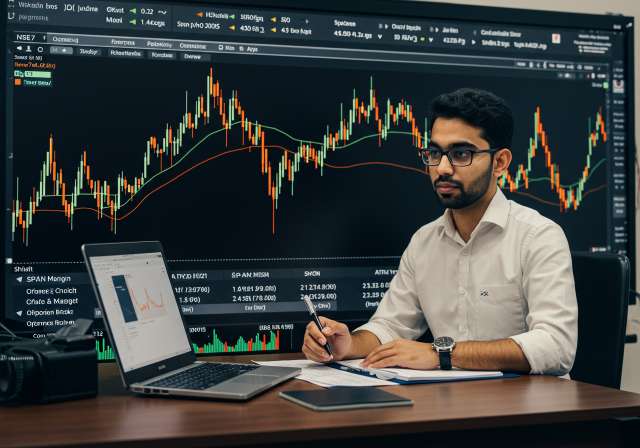

Track the भारतीय शेयर बाजार! Get real-time बीएसई इंडेक्स लाइव updates, understand market trends, a
बीएसई सेंसेक्स: Your Guide to India’s Benchmark Index
Track the भारतीय शेयर बाजार! Get real-time बीएसई इंडेक्स लाइव updates, understand market trends, and make informed investment decisions. Stay ahead with BSE information!
The Bombay Stock Exchange (BSE) Sensex is more than just a number; it’s a barometer of the Indian economy’s health. For investors navigating the complexities of the Indian equity markets, understanding the Sensex is crucial for making informed investment decisions. This guide will delve into the intricacies of the Sensex, providing insights into its composition, calculation, and significance for Indian investors like you.
The Sensex, short for Sensitivity Index, is the benchmark index of the Bombay Stock Exchange (BSE), India’s oldest stock exchange. It represents the performance of 30 of the largest and most actively traded companies listed on the BSE. These companies are selected based on their market capitalization, free-float market capitalization, liquidity, and sector representation. The Sensex serves as a proxy for the overall performance of the Indian equity market, providing investors with a quick and easy way to gauge market sentiment. It reflects the aggregate performance of a portfolio of 30 publicly traded companies in India.
The Sensex was first compiled on January 1, 1986. The base year for the index is 1978-79, with a base value of 100. Over the years, it has become a widely recognized indicator of the Indian stock market’s performance and has witnessed significant growth, reflecting India’s economic development. From humble beginnings, it has grown to represent the booming Indian economy and the increasing confidence of investors.
The Sensex is calculated using the “free-float market capitalization” method. This means that the index value is determined by multiplying the share price of each of the 30 companies by the number of shares available for trading (free-float shares) and then dividing the sum by a divisor. The divisor is a number used to maintain the continuity of the index value and is adjusted for corporate actions like stock splits, rights issues, and bonus issues.
Here’s a simplified breakdown:
The Sensex plays a vital role in the Indian financial ecosystem and is particularly important for investors for several reasons:
The Sensex is influenced by a variety of factors, both domestic and global. Understanding these factors can help investors anticipate market movements.
There are several ways for Indian investors to participate in the Sensex’s performance:
While the Sensex is the most widely recognized Indian stock market index, there are other important indices that investors should be aware of:
Keeping track of the Sensex’s movements is essential for investors. There are several ways to stay updated:
Investing in the stock market involves risk, and it’s crucial for investors to manage their risk effectively. Here are some tips for Indian investors:
Understanding the tax implications of your investments is crucial for maximizing your returns. In India, capital gains from the sale of stocks and equity mutual funds are subject to capital gains tax. Short-term capital gains (held for less than 12 months) are taxed at a rate of 15%, while long-term capital gains (held for more than 12 months) are taxed at a rate of 10% (above ₹1 lakh). It is important to consult a tax advisor for specific advice related to your individual circumstances. Investments in ELSS (Equity Linked Savings Scheme) qualify for tax deduction under Section 80C of the Income Tax Act, 1961.
Equity investments also attract Securities Transaction Tax (STT) at the time of buying and selling. Dividends received from companies are also taxable as per the individual’s income tax slab.
The BSE Sensex is an indispensable tool for Indian investors seeking to navigate the complexities of the stock market. By understanding its composition, calculation, and influencing factors, you can make more informed investment decisions. Remember to prioritize risk management, stay informed about market trends, and consult with financial professionals when needed. Whether you choose to invest through index funds, ETFs, or direct stock purchases, the Sensex serves as a valuable benchmark for tracking your progress and achieving your financial goals. Ultimately, knowledge of the Sensex and other market indicators empowers you to participate confidently in India’s growing economy and build a secure financial future.
Disclaimer: Investment in securities market are subject to market risks. Read all the related documents carefully before investing.
Decoding the BSE Sensex: An Indian Investor’s Perspective
What is the BSE Sensex?
A Brief History
How is the Sensex Calculated?
- Free-Float Market Capitalization: This is calculated by multiplying the number of outstanding shares available for trading in the market by the current market price of the share.
- Index Value: The index value is calculated by summing up the free-float market capitalization of all 30 companies and dividing it by a predetermined index divisor.
- Divisor Adjustment: The divisor is adjusted periodically to account for corporate actions that affect the market capitalization of the constituent companies, ensuring the index accurately reflects market movements.
Why is the Sensex Important for Indian Investors?
- Market Indicator: It provides a snapshot of the overall performance of the Indian stock market. A rising Sensex generally indicates positive market sentiment, while a falling Sensex suggests the opposite.
- Benchmarking Tool: Investors can use the Sensex as a benchmark to evaluate the performance of their own investment portfolios. If your portfolio is consistently outperforming the Sensex, you are doing well.
- Index Funds and ETFs: Many mutual funds and Exchange Traded Funds (ETFs) track the Sensex. Investors can invest in these funds to gain exposure to the same 30 companies that make up the index.
- Economic Indicator: The Sensex is often seen as a leading indicator of the Indian economy’s health. A strong stock market usually reflects a growing economy.
- Investment Decisions: Analyzing the movement of the Sensex helps investors gauge market trends and make informed decisions about buying or selling stocks. Observing the index’s trends can signal opportunities or potential risks.
Factors Influencing the Sensex
- Economic Growth: India’s GDP growth rate, inflation, and interest rates all have a significant impact on the Sensex. Higher growth rates usually lead to a stronger stock market.
- Corporate Earnings: The financial performance of the companies that make up the Sensex is a key driver of the index’s performance. Stronger earnings generally lead to higher stock prices.
- Global Market Trends: Global economic conditions, such as interest rate changes in the US or economic slowdowns in Europe, can also affect the Sensex.
- Government Policies: Government policies related to taxation, infrastructure development, and foreign investment can all influence the Sensex.
- Geopolitical Events: Global political events, such as wars or trade disputes, can create uncertainty and volatility in the stock market.
- Investor Sentiment: Investor confidence and risk appetite play a crucial role. Positive sentiment can drive the market upwards, while fear and uncertainty can lead to sell-offs.
Investing in the Sensex: Options for Indian Investors
- Index Funds: These are mutual funds that aim to replicate the performance of the Sensex. They invest in the same 30 companies in the same proportion as the index.
- Exchange Traded Funds (ETFs): These are similar to index funds but are traded on the stock exchange like individual stocks. They offer more flexibility and liquidity than traditional index funds.
- Direct Investment: Investors can directly invest in the individual companies that make up the Sensex. This requires more research and analysis but can potentially offer higher returns.
- Systematic Investment Plans (SIPs): SIPs allow investors to invest a fixed amount of money in index funds or ETFs at regular intervals (e.g., monthly). This helps to average out the cost of investment and reduce risk.
Beyond the Sensex: Other Important Indian Indices
- Nifty 50: This is the benchmark index of the National Stock Exchange (NSE) and represents the performance of the top 50 companies listed on the NSE. It’s another key indicator of Indian market health.
- BSE Midcap and Smallcap Indices: These indices track the performance of mid-sized and small-sized companies listed on the BSE, respectively. They offer insights into the broader market beyond the top 30 companies.
- Sectoral Indices: The BSE and NSE also offer sectoral indices that track the performance of specific sectors, such as banking, IT, or healthcare. These can be useful for investors who want to focus on specific industries.
Staying Informed: Tracking the Sensex Live
- Financial News Websites: Websites like Moneycontrol, Livemint, and The Economic Times provide real-time updates on the Sensex and other market news.
- Brokerage Platforms: Most online brokerage platforms offer real-time Sensex data and charts.
- Television: Business news channels provide regular updates on the stock market.
- Mobile Apps: Numerous mobile apps offer real-time stock market data and analysis.
The Importance of Risk Management
- Diversification: Don’t put all your eggs in one basket. Diversify your investments across different asset classes, sectors, and companies.
- Long-Term Perspective: The stock market can be volatile in the short term. Focus on long-term goals and avoid making impulsive decisions based on short-term market fluctuations.
- Risk Tolerance: Understand your own risk tolerance and invest accordingly. If you are risk-averse, consider investing in more conservative assets like debt funds or gold.
- Stop-Loss Orders: Use stop-loss orders to limit your potential losses on individual stocks.
- Financial Advisor: Consider consulting a financial advisor for personalized investment advice.

Be First to Comment